Our grandparents / The New Jersey line
DON MELICK.
From a dairy farm in Oldwick to a career serving modern agriculture—and back through the generations of family who helped shape the place he came from.
A boy from Oldwick.
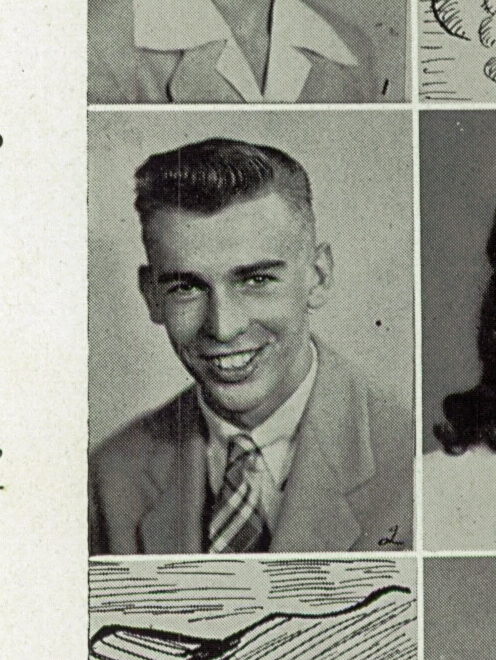
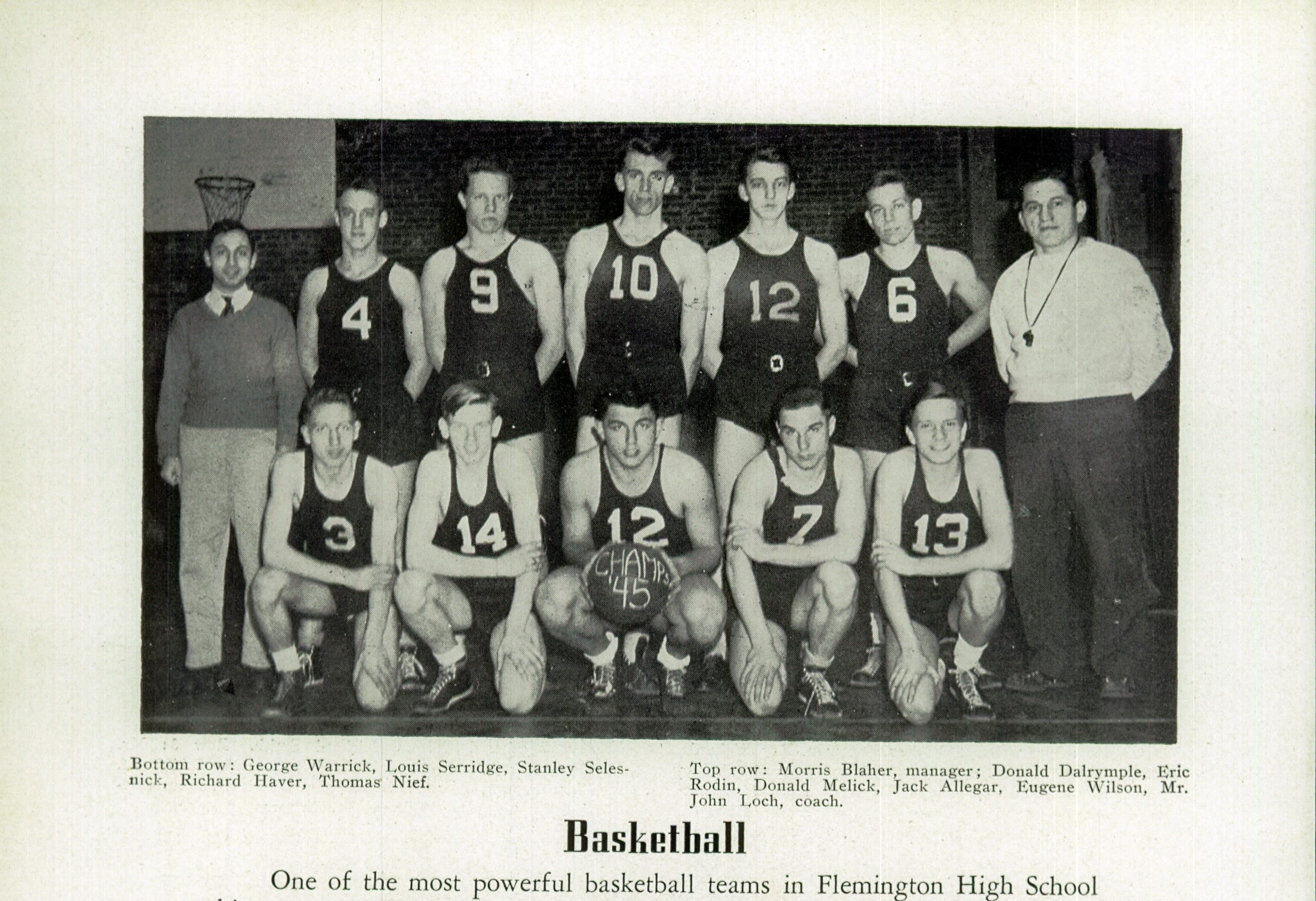
In a Flemington High School photograph from 1945, Donald Walter Melick stands in the back row of the basketball team wearing number ten. He is seventeen years old, a dairy farmer's son from Oldwick, New Jersey. Behind that familiar school portrait lies a family history stretching back to the village's beginnings.
Don had been born on November 9, 1927, to James Warren Melick and Margaret Ann Beavers. James and Margaret married in 1923. Their first son, Warren Edwin, died in infancy in 1926; Don arrived the following year. Doris was born in 1928, and Robert in 1934. The children grew up on the Melick Dairy Farm on Homestead Road in Tewksbury Township, surrounded by fields and farms that had shaped the region for generations.
Farming was not a picturesque backdrop to their lives. Dairy cows required attention every day, and the work continued in every season. During the Depression, prices and markets were uncertain even when the chores remained constant. The countryside was changing, too, as machinery, automobiles and new methods gradually altered the way local farms operated.
Both sides of Don's family knew agricultural work. His maternal grandfather, Joseph Beavers, was recorded as a dairy farmer in 1910 and a farm manager ten years later. Don's father, James Warren Melick, had worked as a farm hand before starting his own household with Margaret.
In 1930, James and Margaret were raising their young children in Tewksbury. The census described James as a fruit-farm laborer and recorded the family as renters. By 1940, he was a farm manager; by 1950, a farmer. Don, now twenty-two, appeared in that same household as a farm helper. These records do not establish that every census described the same property.
The 1950 census preserves another quiet detail. Margaret's mother, Cora Beavers, was living with them. Three generations shared the household, their family relationships continuing alongside the daily work of the farm. Examine the original census records in James's timeline ↗
Don went to Flemington High School, where the yearbook preserved a smiling portrait and that basketball team photograph. After school, he spent roughly ten years working with his father. Farming was his first occupation, but it would not be his last.
His working life would eventually lead him to the presidency of a company that made egg-processing equipment. In a different century, his ancestors had built mills, tended orchards and adapted to the demands of agriculture in other ways. To understand the place Don came from, it helps to start with a curious detail: the village of his childhood had only recently acquired its name.
Oldwick was once New Germantown.
When Don was born, Oldwick had been called Oldwick for only nine years. His father James had grown up knowing it as New Germantown.
Before that, the settlement had been called Smithfield, after an early colonial landholder. German-speaking settlers gave the village another identity as New Germantown, where Lutheran church life, mills and neighboring farms helped bind the community together. In 1918, during the First World War, anti-German sentiment prompted another change. New Germantown became Oldwick.
The names describe successive chapters of a much older place. Long before European settlement, the region belonged to the homeland of the Lenape, whose communities were displaced and disrupted as colonial farms, roads and towns expanded.
For the Melicks, the changes were part of family history. An early ancestor had worked his mill in colonial New Germantown. Later generations farmed nearby through the Revolution, the Civil War era and the rise of commercial agriculture. James and Margaret raised Don and his siblings after the village took its new name, but the same countryside surrounded them.
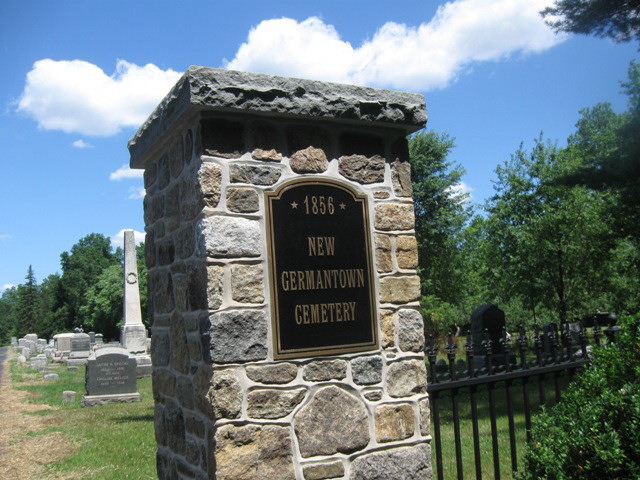
Explore the village’s earlier names ↗
The Melicks' American story had unfolded here for nearly two centuries. Its beginnings lay across the Atlantic, along two rivers in a very different landscape.
The rivers they left behind.
Before the family name became Melick in America, it appeared as Moelich in the German-speaking lands along the Rhine and Moselle rivers.
One of the family's ancestral places was Winningen, a village on the Moselle near Koblenz. Steep vineyards rose above the river, and the settlement was shaped by wine-growing, trade, church life and the rhythms of a busy waterway. Its families belonged not to a unified Germany, but to a patchwork of territories within the Holy Roman Empire.

Religion was part of that landscape. Winningen embraced Protestant worship during the Reformation, and communities across the region endured periods of warfare and political upheaval in the centuries that followed. Such changes influenced where people could worship, work and make their homes.
The Moelich family was also associated with Bendorf, on the Rhine. One ancestor, Jonas Moelich, is remembered as establishing a tannery there. Tanning transformed animal hides into the durable leather needed for shoes, harnesses, saddles and equipment. It was hard, practical work, closely tied to everyday commerce.
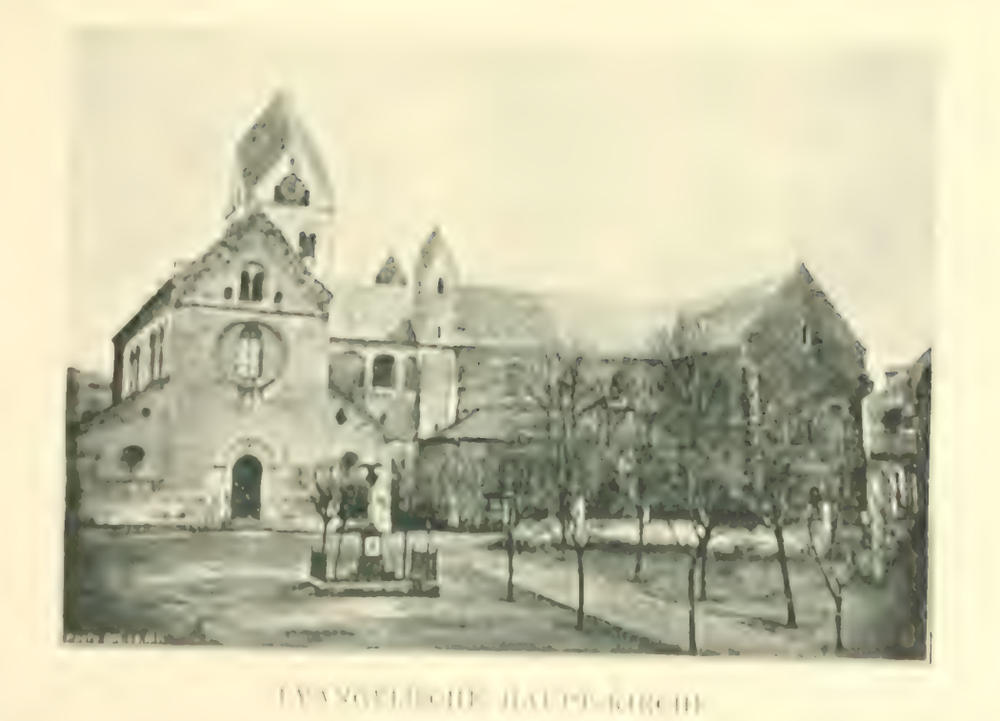
Among Jonas's descendants were brothers Johannes and Johann Peter Moelich. Both became part of the early American family history, but they founded different lines in New Jersey. Johannes's household built the celebrated Old Stone House near Bedminster in 1752, the homestead at the center of Andrew D. Mellick's later family history. That was a related branch, not the farmhouse where Don grew up. Johann Peter was the father of Tunis Melick, Don's direct ancestor.
It was Johann Peter who crossed the Atlantic in the 1720s and carried this branch of the family into a new country.
Family Stories / The related branchA house built to outlast them ↗The Bedminster stone house made another Moelich line famous. Its history preserves family legends and an original photograph—but it was not Don's own ancestral homestead.The first American generation.
In 1728, Johann Peter Moelich arrived in Philadelphia from the German-speaking Rhine country. He was about twenty years old. The journey would become one of the family's most carefully remembered crossings.
Johann Peter had been baptized in Bendorf in 1708. An entry in the Evangelical church's register recorded his father, Johan Wilhelm Moelich, and named his godparents, including a namesake from the family. He was already part of a network stretching between Bendorf and Winningen before he embarked for America.
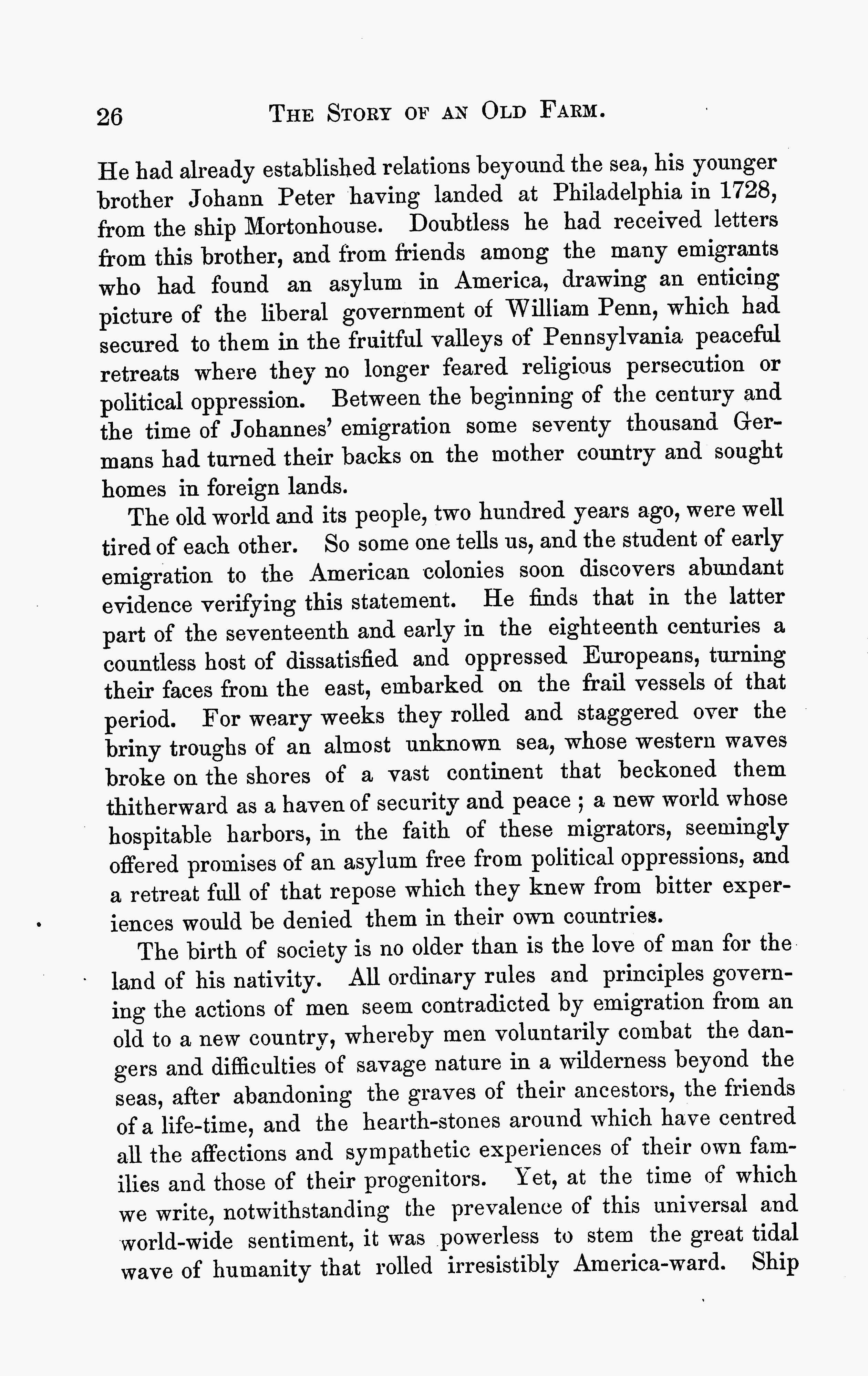
A family history · 1889
A crossing remembered in print.
Andrew D. Mellick's The Story of an Old Farm names Johann Peter as the younger brother of Johannes and records his arrival aboard the Mortonhouse in 1728.
Examine the original page ↗German-speaking immigrants were arriving in the British colonies in increasing numbers, seeking land, work and new prospects. Philadelphia was a major port of entry, but the journey did not end at the wharf. Families and newcomers moved onward through the colonies, finding relatives, joining congregations and establishing work in unfamiliar communities.
The Mortonhouse, under Captain John Coultas, sailed from Rotterdam by way of Deal, England, and reached Philadelphia on August 24, 1728. Johann Peter's later whereabouts are less certain; one early family account suggests that he remained in Pennsylvania. His children, however, became firmly associated with Hunterdon County. As descendants spread into neighboring townships, Moelich took forms including Melick and Mellick.
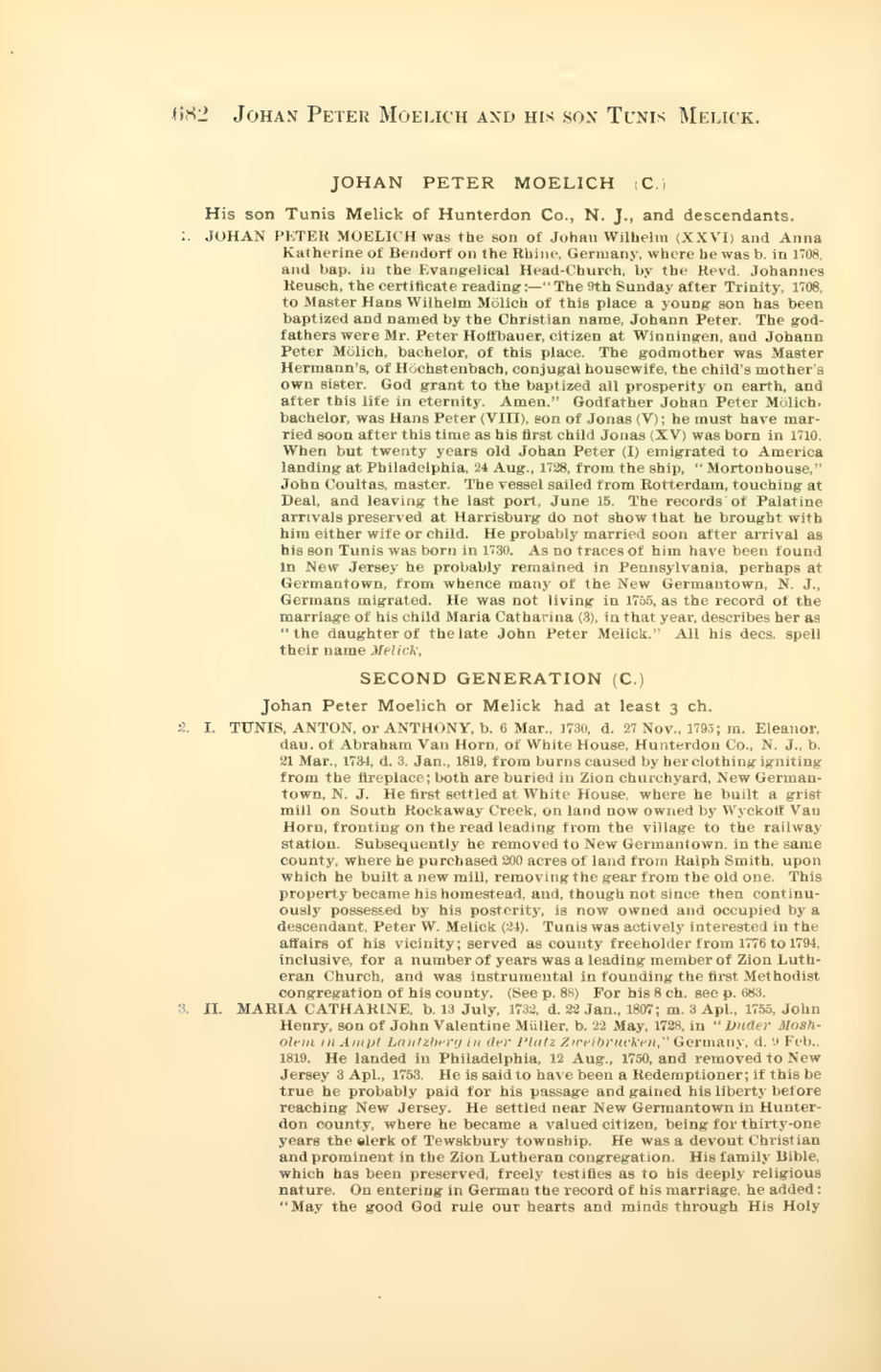
Johann Peter's recorded children included John, Maria Catharine and Tunis Anton Melick, born in March 1730. Tunis was part of a generation growing up amid the expanding settlements of colonial New Jersey, where farms and mills served communities connected by narrow roads, streams and family ties.
Family Stories / A sister's householdThe Bible that remembered a family ↗A Bible kept by Tunis's sister Maria Catharine and her husband preserved their marriage, their children's births and a remarkable expression of grief.In the Melick family, the change from an immigrant tradesman's world to a settled American community would become especially visible through Tunis, whose work left its mark on New Germantown.
Tunis and the mill.
Tunis Anton Melick became a miller, and in an agricultural settlement a mill was one of the places around which daily life turned.
Farmers could grow grain, but grain had to be ground before it became the flour or meal used in kitchens and sold to others. Water-powered machinery made that work possible on a larger scale. Wagons arriving with grain brought commerce to a village and connected its otherwise scattered farms.
Tunis first operated a gristmill beside South Rockaway Creek at White House. He later purchased about 200 acres from Ralph Smith near New Germantown and became associated with another mill there. One family history says he moved the machinery from White House into a new mill; an earlier township history credits Smith with building the original mill at that site. However it was constructed, the New Germantown mill tied Tunis to the farmers whose harvests depended on streams and millstones.
He married Neeltje Van Horne, also called Eleanor, from a Dutch-descended New Jersey family. Their marriage joined two communities whose family names recur throughout the region's early history. Together they raised children who carried those connections into another generation.
Tunis served repeatedly as one of Tewksbury's freeholders—the township's representatives in county government. His name appears in the official lists in 1771 and 1773, again in 1776, 1779–1780 and 1782–1783, and throughout 1789–1794. The service began before American independence and continued through the Revolution into the early republic. The responsibilities of local government endured as the political world around New Germantown was remade.
But one of the strongest glimpses of his character comes from a different kind of public gathering. In 1782, while a Methodist missionary was staying with him, the Lutheran pastor denounced the visitor from the pulpit. Tunis stood up in protest, joined by another church warden. Both men were later removed from their posts, and Tunis and Eleanor helped establish an early Methodist congregation in the county. It was a bold break with the church his wider family had long supported.
Family Stories / An ancestor speaks upThe sermon that split the congregation ↗How a visiting preacher, an angry pastor and a miller who would not remain silent helped change New Germantown's religious life.Tunis died in 1795. Eleanor outlived him by more than twenty years; the 1889 account records that she died in 1819 after her clothing caught fire at the household fireplace. Both were buried at Zion Lutheran Church, whose churchyard would hold the names of many families from the surrounding countryside.
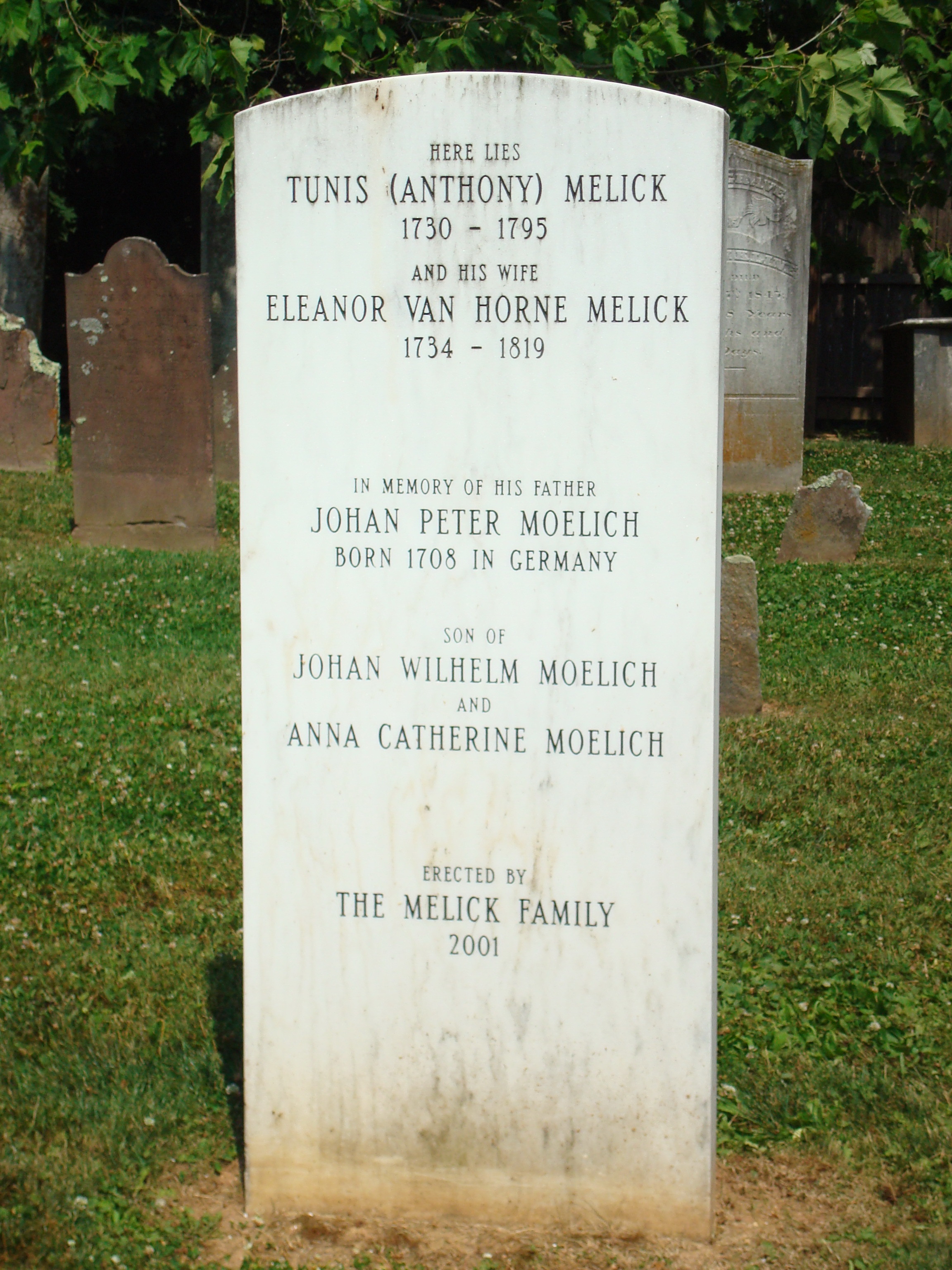
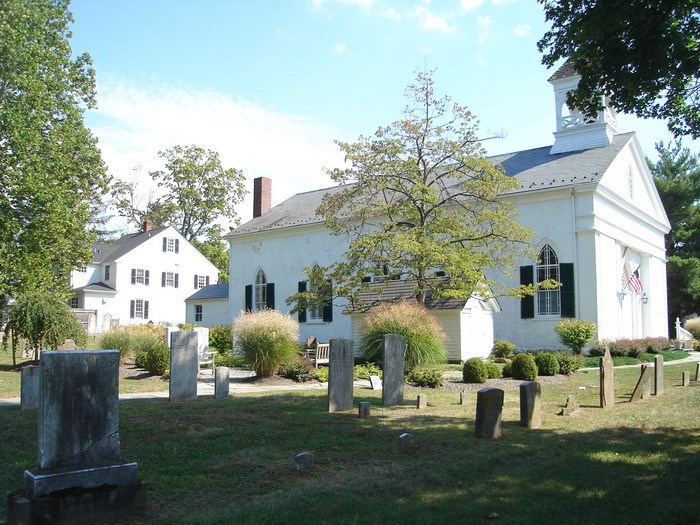
The mill was part of the village's early economy. The generations that followed increasingly made their livelihoods on its farmland.
From millers to farmers.
The next generations lived through the transformation of New Jersey from a collection of colonial settlements into a state of farms, market towns and growing connections to nearby cities.
Tunis and Neeltje's son Peter V. Melick (1758–1818) came of age during the Revolution and succeeded his father on the New Germantown homestead. He married Susannah Egbert in 1783, joining another longstanding New Jersey family. Their son John Vliet Melick, who died in 1857, grew up in the new republic and married Mariah Brunt Auble.
The marriages mattered as much as the names. Susannah Egbert's ancestry carried another early history into the family: Dutch-speaking relatives of New Amsterdam and Staten Island, landowners and millers who later settled around Readington. Her grandfather James (Jacques) Egbert had worked at Fresh Kills on Staten Island, and her father Nicholas was identified as a miller in New Jersey. The Melick and Egbert families both understood the work of a gristmill long before their children married.
Follow Susannah Egbert’s earlier family line ↗
John Vliet and Mariah's son John Vroom Melick (1836–1902) would be the next to leave a clear mark on the family landscape. His story takes us not to a mill but to a farm on King Street—and to the Craig family through whom that farm entered the Melick household.
Two branches. Two farms.
John Vroom Melick worked for a New Germantown farmer named John Craig. He married Craig's daughter, Margaretta Welsh Craig, and their family came to possess the farm on King Street.
When John Craig died in 1869, the property passed to John Vroom and Margaretta. The history of this farm is therefore also Margaretta's story. It entered the Melick family through her inheritance, not through an unbroken chain of Melick fathers and sons.
Her mother, Dorothy Welsh, was the daughter of Jacob Welsh and Catharine Crater. Jacob had come to Tewksbury in 1797, settling about a mile northwest of New Germantown. In the Welsh–Craig marriage, and then the Craig–Melick marriage, neighboring families brought their land and histories together. King Street belonged to more than one surname long before it belonged to the Melicks. Earlier Welsh relatives had come from the Palatinate and settled at German Valley; Margaretta's ancestry also reached a blacksmith and landowner named Johann Moritz Scharfenstein.
Explore the Welsh–Craig family history ↗
Their son Walter Cameron Melick (1863–1931) lived as New Jersey agriculture entered a new age. Orchards supplied fruit for markets beyond the township; railroads promised quicker transportation; machinery and new treatments changed the work that farmers could do. Around 1900, Walter's peach trees faced a devastating infestation of San José scale. He chose to pay for treatment, and the trees survived when many others did not.
Walter and his wife Mary Lynn Van Sickle raised sons whose families pursued different kinds of agriculture. The branch of Walter's son George Burns Melick continued the orchard property that became known as Melick's Town Farm. His son James Warren Melick, born in 1898, would raise Don and his siblings on the dairy farm at Homestead Road.
They belonged to the same extended family and the same working countryside, but they were not the same farm. The orchard history and the dairy-farm childhood are related chapters, each with its own place in the family.
Family Stories / A farming gambleThe orchard that survived ↗Walter's costly decision to protect the trees from an insect that threatened a region's peach industry.In James's dairy farm, the family history returns to Don's own childhood—and to a century in which agricultural work was changing again.
From the farm to the wider world.
Don began by working alongside his father. Over the following decades, the dairy farmer's son made a career in businesses serving a changing agricultural industry.
He spent about ten years farming in Oldwick before working for Curtis Breeding Company in Bethlehem Township. He then worked for Kuhn Brothers in Flemington for seventeen years. These were years in which American agriculture was becoming increasingly specialized, and the equipment and businesses supporting farms were changing rapidly.
His next position took him into company leadership. Don became president of F.P.S., a Lancaster business formerly known as MOBA USA of Allentown that manufactured egg-processing equipment. He held that position for thirteen years, retiring in 1991. His working life had moved well beyond his father's dairy farm, but the industries he knew remained tied to the production and handling of food.
Beyond work, Don was building his own family. In September 1953 he married Evelyn Lorraine Kennedy. Their household brought together children from Evelyn's earlier marriage and children they shared, with relationships that extended across the family as it grew. They eventually made their home in the Bethlehem area of Pennsylvania.
Don belonged to Grace Lutheran Church and served as president of the Sertoma Club of Easton. Oldwick remained the place of his childhood, but home and community had come to include a different part of the Lehigh Valley.
His retirement was brief. On March 20, 1992, Don died at the age of sixty-four following a heart attack while driving, in circumstances his family remembers as involving a car accident. He was survived by Evelyn, their family and members of the Oldwick household in which he had grown up.
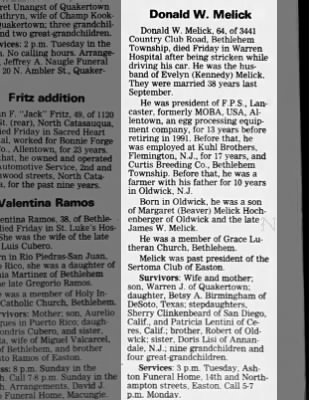
His obituary traced his working years from farming with James to leading an agricultural-equipment business. It was a life that carried him away from the daily routines of Homestead Road without losing its connection to the work done on farms.
The boy in the photograph.
Return to the basketball photograph from 1945. Don stands in the back row, number ten, alongside his Flemington High School teammates. His life is still ahead of him.
The young man in that picture belonged to a family already woven into the history of Oldwick. Across the Atlantic, earlier generations had lived in river villages and worked in trades along the Rhine. In colonial New Jersey, Tunis had built mills and served his community. Later, the family moved through marriages, farms, changing crops and new businesses. On Homestead Road, James and Margaret raised Don in the middle of that long history.
Don did not spend his life repeating theirs. He married Evelyn, helped build a family, moved to Pennsylvania and made his career in a modern agricultural industry. The places and occupations changed, as they had for the Melicks before him.
The school portrait captures a moment in his youth. The obituary captures something of the life that followed. Between them is the story of a husband, father, grandfather, farmer's son and business leader whose life reached across places and generations.
For those who knew him only briefly, those photographs and places offer a connection to the man. For the generations who came after him, the longer family history offers another: a sense of where he began, who came before him, and how their stories became part of our own.
Photographs, records and histories.
Don's school photographs and obituary survive alongside older family histories, church and community records, and accounts of New Jersey's farms and villages. They are part of the family archive.
- “The Melicks of Oldwick — Tewksbury's First Family of Farming”, General Store, Autumn 2001. Includes the King Street farm, Walter's orchard and the local railroad.
- Doris A. Melick Craig obituary (2017). Includes the family's home on Homestead Road.
- Hunterdon County historical tour of Oldwick. The village's names and local heritage.
- Andrew D. Mellick, The Story of an Old Farm (1889). Chapter VII (pp. 87–88) and the genealogical appendix (pp. 682–683, 687) preserve the Methodist dispute, Johan Peter's crossing, Tunis's mills and family, and Peter's descendants. The original Bendorf church plate (facing p. 92) and appendix p. 682 are reproduced above. The book's John Vliet birth date differs from the tree's entry; the public narrative avoids choosing between them.
- James P. Snell, History of Hunterdon and Somerset Counties (1881), Tewksbury section (pp. 474–475, 477–479, 481–482, 484–485). The county history documents the Welsh–Craig marriages and the township freeholder lists. It attributes construction of the New Germantown mill to Ralph Smith, differing from the 1889 family account.
- Melick Family Research, family-assembled research packet, PDF pp. 14–21: Charles P. Staubach's Egbert Family History connects Susannah's ancestors to Staten Island, wills, mill properties and Readington. PDF pp. 12–13 and 34 include the compiled Welsh and Scharfenstein accounts. These secondary sources are distinguished from their cited original documents.
- Family materials: Flemington High School yearbook photographs, The Morning Call obituary (March 22, 1992), and the Melick family tree.
Beyond the biography
Every family has stories
inside its story.
A village renamed in wartime, Dutch Egbert millers, a Welsh family crossing the Atlantic, a divided Revolutionary household and a family Bible belong to the wider history. Explore each in its own story.
Explore Family Stories ↗Explore Don’s ancestors ↗View original documents ↗